01
Format first. Before thinking about a famous name, see how the table distributes the rounds and who takes part in each stage.
Roulette, blackjack, baccarat, and poker may share the same label, but they do not call for the same attention. On 5hhh, the focus is on what changes from one game to another: format, decision-making, player participation, and the kind of reading each table requires.
Not every table game calls for the same kind of attention. Some depend almost entirely on the spin; others leave real room for choice, memory, pace reading, and time control. The point is not to memorize jargon. It is to notice how each format behaves and where the player can actually decide something along the round.
In roulette, the logic is direct: you follow the spin and understand the result through a simple mechanic. That makes it a common entry point for anyone who wants to see the table move quickly, without having to deal with card combinations or reading opponents.
When looking at this format within 5hhh, it is worth separating two things: what is visually appealing and what is actually useful for anyone who wants to follow the game’s proposal without rushing. The table may be eye-catching, but practical interest usually comes from the clarity of the rules and the way each round ends.
Before sitting down, it is worth observing how the table distributes the player’s attention. In some games, the focus is almost entirely on the final result; in others, each round calls for reading cards, remembering what has already appeared, and being careful not to act on impulse. That changes the experience a lot. Anyone who enters without that awareness may confuse fast pace with ease, when in practice the table demands more concentration than it seems at first glance.
Another important point is understanding whether the game favors continuous decisions or only occasional responses. There are tables where the participant chooses among a few well-defined actions, which makes the dynamic more objective. In others, small choices throughout the round can change the perception of how things are unfolding. This difference helps avoid frustration, because not every format was made for those who want constant participation or for those who prefer to follow everything more passively.
It is also worth paying attention to the kind of information the table offers before the bet or before joining the round. Some interfaces show everything very clearly; others require the player to reread rules, limits, and format variations. When this prior reading is ignored, errors from distraction increase. In the context of 5hhh, looking calmly at the table presentation is just as important as knowing the game’s name.
The speed of the round deserves special care. A faster table may seem simple, but it can also reduce the time available to think. A more measured game, on the other hand, gives space to observe patterns, confirm decisions, and avoid automatic moves. The ideal is not to confuse fluidity with advantage. Sometimes, the best fit is precisely the format that lets you breathe between one action and the next, without demanding rushed responses all the time.
It is also worth noting how the game handles repetition. In very linear tables, the interest may come from the consistency of the rules; in others, variety appears in the sequence of hands, spins, or choice possibilities. This influences the level of attention needed during the session. The more the game depends on following subtle changes, the more useful it will be to enter with realistic expectations and without imagining that all tables work the same way.
Finally, observe whether you understand the role of chance and the role of decision in that specific format. In some cases, the player only follows the outcome; in others, reading the moment helps organize each step better. Knowing how to distinguish these two layers avoids confusing expectations and makes the experience more coherent. It is this simple reading, even before the first round, that helps you choose better where it is worth staying and where it may be better to just observe.
Blackjack, baccarat, and poker are often mentioned together, but the similarity ends early. In one, the player’s decision matters with every hand; in another, the dynamic is more automatic; in the third, the confrontation between participants changes the reading of the table. The difference lies less in the name and more in what each round calls for.
In blackjack, following cards and deciding when to continue, stop, or adjust the hand creates a much more active experience. In poker, the table gains another layer: the game also depends on positioning, reading the other side, and managing visible and invisible information.
For anyone reading 5hhh content with an editorial eye, the value lies in that separation. Mixing everything as “casino game” erases important nuances. When the format changes, the way you understand risk, time, and participation changes too.
If the idea is to compare without improvising, this is the right filter: what depends on pure luck, what accepts player decision, and what requires direct confrontation.

When comparing tables, it is worth looking at three simple criteria: how much action the player has, how much information is available before the next decision, and how the round reorganizes after each move. These points help separate games that seem similar in name but operate very differently. In editorial content from 5hhh, this reading avoids generalizations and makes it clearer when the choice is more strategic, more automatic, or more focused on continuous observation of the table.
It also makes a difference to think about pace. There are games where the wait between one decision and the next is short, while others require following the table with more patience and accepting that not every round offers the same room for intervention. This detail changes the user experience and the way they interpret their own involvement. Instead of treating everything as a single category, the most useful approach is to observe how each game distributes attention, time, and reading.
Another important point is the relationship between perceived skill and short-term outcome. In some tables, the impression of control increases because the decision appears more often; in others, the structure reduces that feeling and repositions the player's role. This does not make a game better or worse, only different to follow. For those looking to understand table games more precisely, this contrast is what really organizes the comparison.
Format first. Before thinking about a famous name, see how the table distributes the rounds and who takes part in each stage.
Decision matters. Some games hardly ask for action; others put small but frequent choices in the player's hands.
Pace changes everything. There are faster tables and tables that require pauses, reading, and sequence. Player comfort usually comes from there.
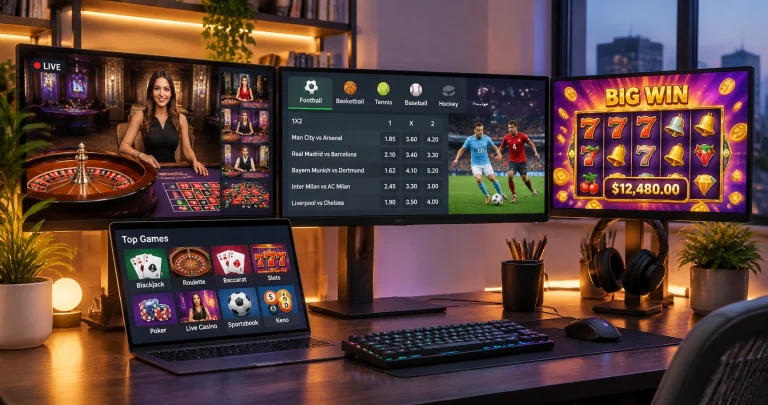
Context matters. In 5hhh, table games appear alongside slots, live casino, and sports because the reader's interest may vary.
No. They may share the same universe, but the experience changes a lot. Roulette revolves around the spin result. Blackjack adds hand-to-hand decisions. Baccarat tends to be more direct in how the round unfolds. Poker involves reading the opponent and more strategic interaction.
The level of participation. When the game asks for repeated choices, card observation, reading situations, and adjusting posture throughout the rounds, the sense of activity grows. In more automatic tables, the player follows more than interferes.
Because the reader may arrive with a different interest. Some people want to compare tables; others prefer to see slots; others look for live casino or sports. Bringing these topics together in the same portal helps place each category in the right spot, without mixing everything into a single read.
It comes in as a basic filter. The content on 5hhh treats table games as informational content for adults and recommends looking at pace, time limits, and clarity before moving forward. When the reading becomes more conscious, the experience tends to be more stable.
If your question is whether to start with the simplest format or the one that requires more reading, it is worth matching your interest with the type of table. Those who want visual comparison can go to slots. Those looking for live presence can check live casino. Those who want another angle of following can open sports. On 5hhh, the category changes, but the logic of reading stays clear.

Guias para aprofundar o assunto, no seu ritmo.
Kontign eus Royal Partners Petra eo Royal Partners? Avantajoù Royal Partners Penaos daolataat c'hoarioù slot-machines Bonusoù evit Casino War-lerc'h Rapid Tr
Ler artigo ↗
{"error":{"message":"Your account balance is insufficient. Please recharge to continue using the service.","type":"insufficient_balance","source":"system","deta
Ler artigo ↗
Kompren ar diferans etre 5h pe 5 h Uzo rekt ar ekspresion 5h pe 5 h Kuriositez ha tèrmo liez Tabl explikativ lo 5h pe…
Ler artigo ↗